

The cost of a divided picture.
The field moves.
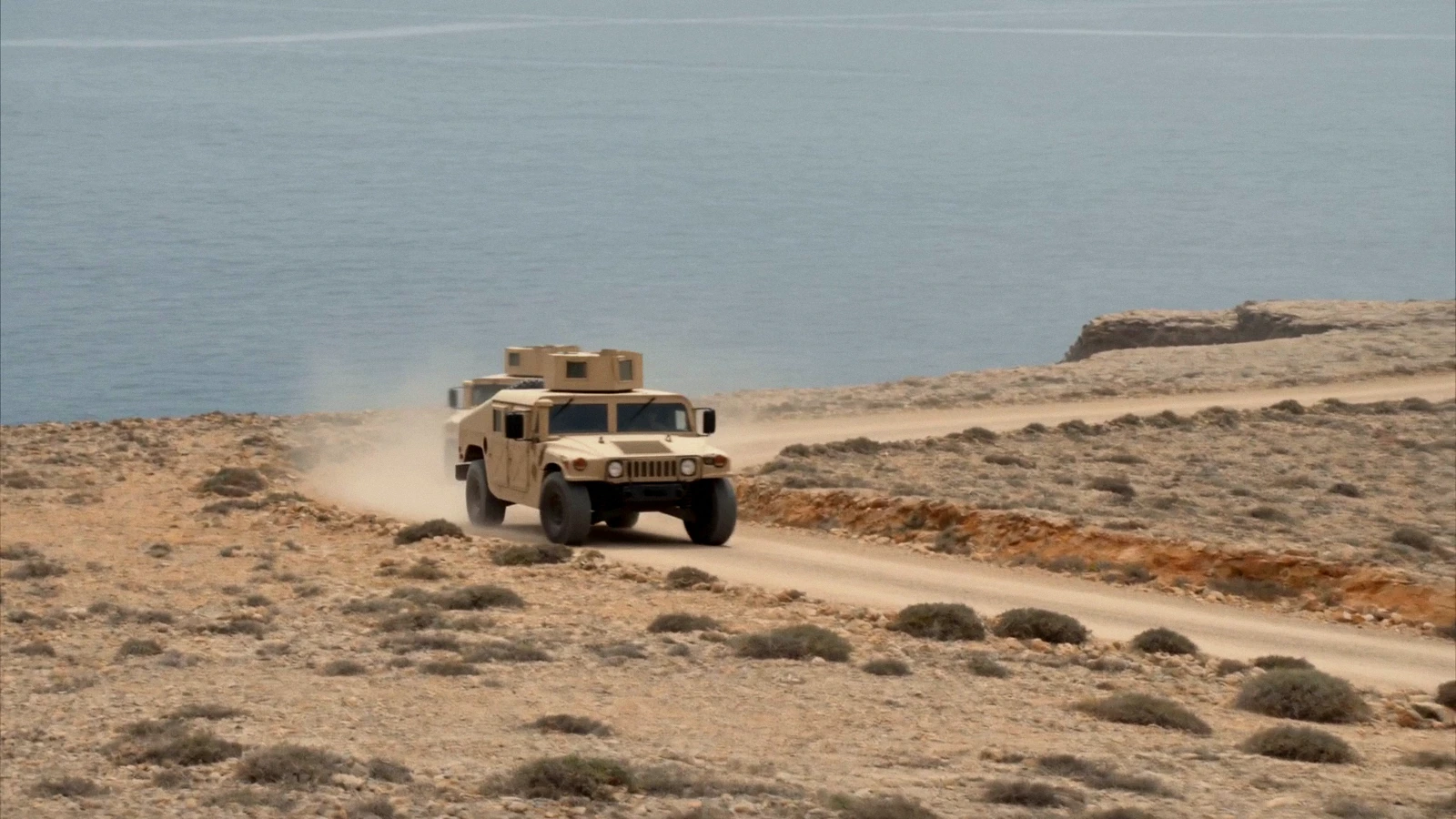
A plan is a set of promises about the next few hours: where people will be, what they will carry, when they will move. The field breaks those promises constantly. A road closes. A landing zone fogs in. A crossing goes down for an hour.
That is not a failure of planning. It is the condition planning exists to serve. What counts is the next few minutes after a change is reported, and who knows about it.
A picture divides.
Every staff section keeps its own working copy. A map on one screen. A synchronization matrix in a spreadsheet. A brief in slides. Each was right when it was made. After the road closes, they are no longer right at the same time.
The danger is rarely that nobody knows. It is that different people know different things, and every version looks finished. A divided picture does not announce itself. It shows up later, as a convoy arriving into a boarding window that already moved.
Three working copies, one hour after the road closes, and the same three once the picture is shared.
Divided
Shared
Make the relationship visible.
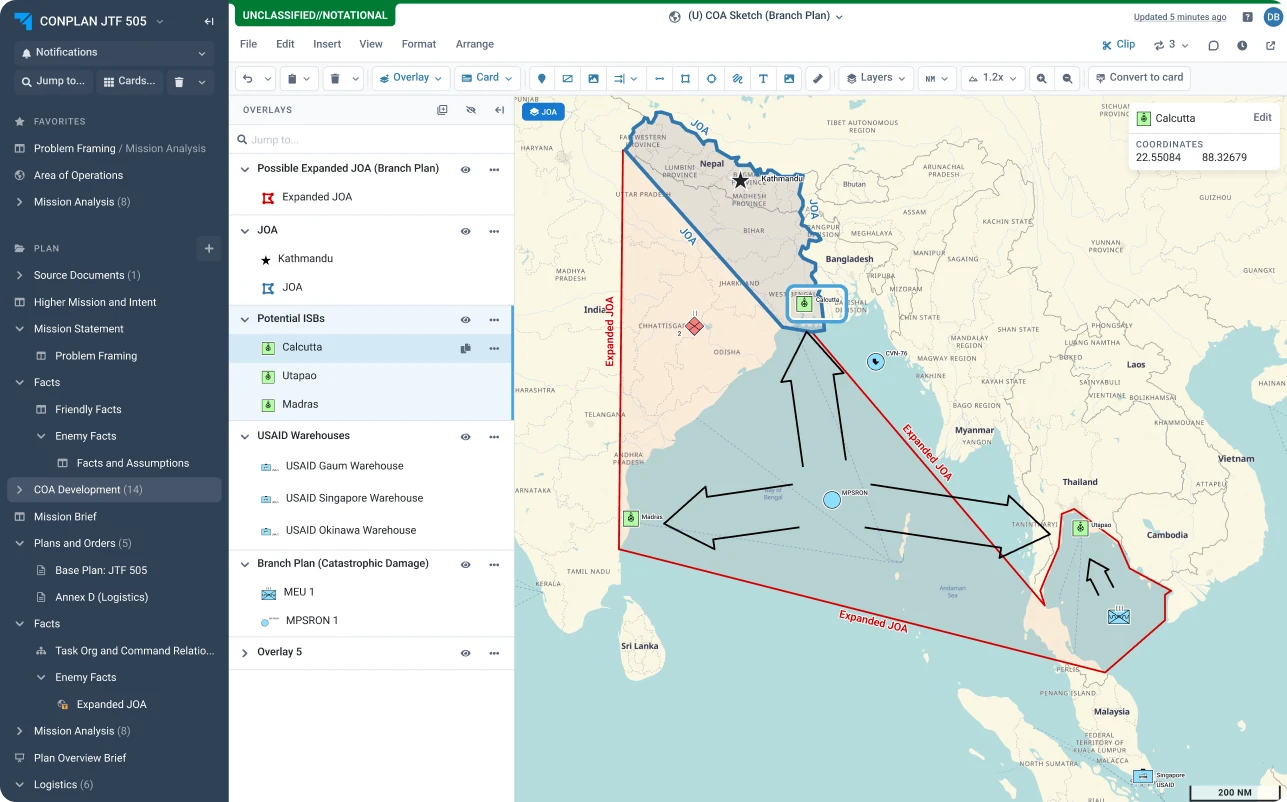
The information in a plan is connected even when the documents are not. The route sets the arrival. The arrival boxes in the boarding window. The boarding window sets the departure the commander will be briefed on.
Keep those relationships in separate files and people carry every change by hand, one copy at a time, and the slowest copy sets the pace for everyone. Keep them in one structure and the structure carries the change. People spend their attention on what it means.
Change one fact. Everything that depends on it should know.
The mechanism.
This is the idea behind Onebrief’s Cards. A Card is where a piece of information is stored and reused. Any change to a Card is reflected everywhere, in every product built from it: maps, timelines, documents and briefs.1
Speed is not the point. The point is that the person reading the brief and the person who filed the report are looking at the same revision.
Judgment stays human.
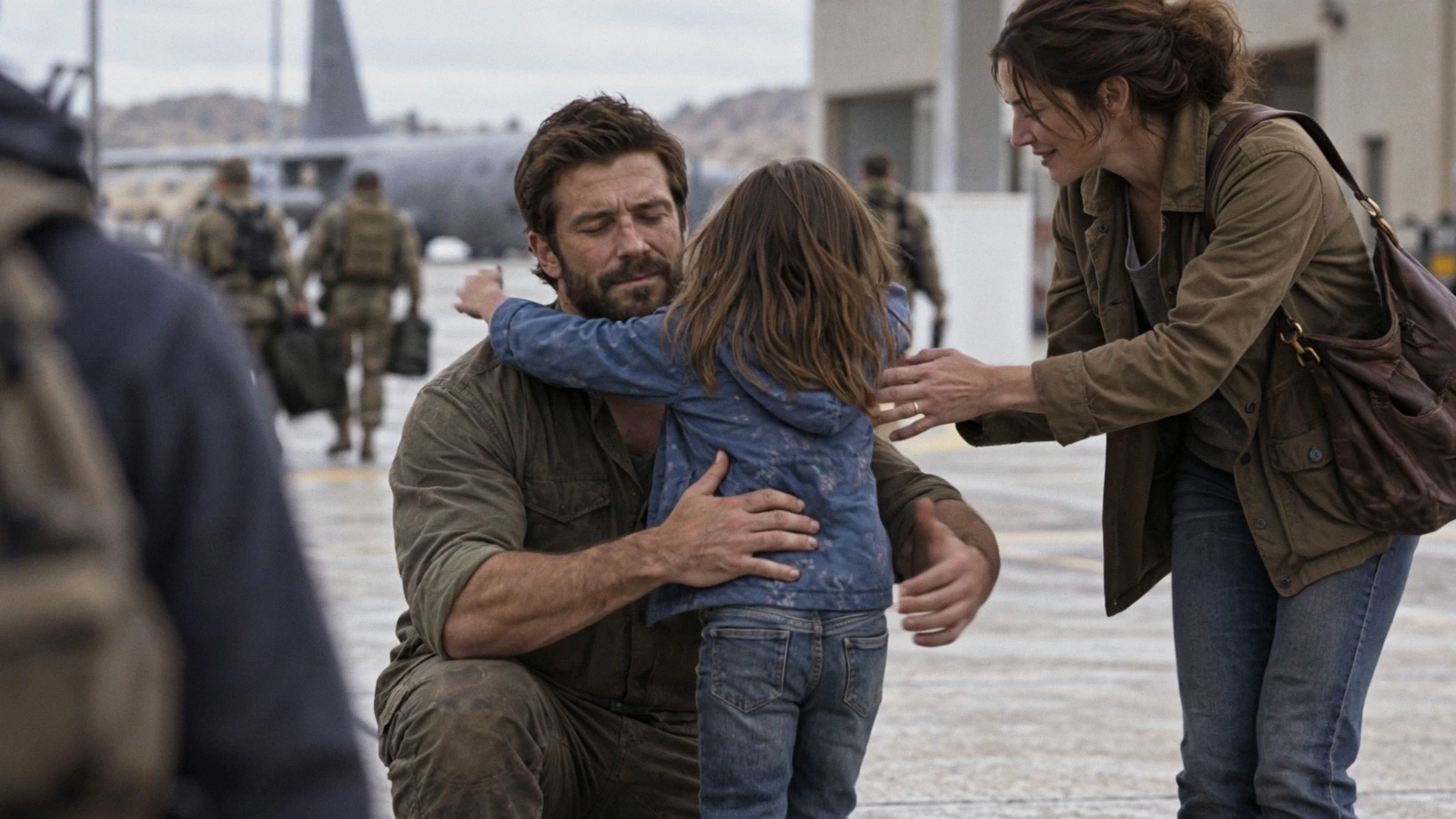
A shared picture does not make the decision. It closes the distance between what is known and what is decided. Onebrief is direct about where responsibility sits: agents accelerate, commanders decide.2
In the sequence on the homepage, connected information shows the inland route colliding with the boarding window. Hold the departure, accept the risk, or find another way: that is a command decision. It belongs to someone accountable for the people on the aircraft and on the road.
Test it against the work.
Claims about connected planning should be tested against real work. In one Onebrief impact study, a team that had built its daily briefs in Word and PowerPoint did that work in Onebrief during a ten-day, large-scale simulation exercise, and reported saving more than 500 hours.3 That is one team’s result, not a benchmark. Its value is in the detail of where the hours went.
The useful question for a command is narrower than whether a platform is fast. When the field changes, how long until the people who decide are looking at the same thing as the people who reported it?